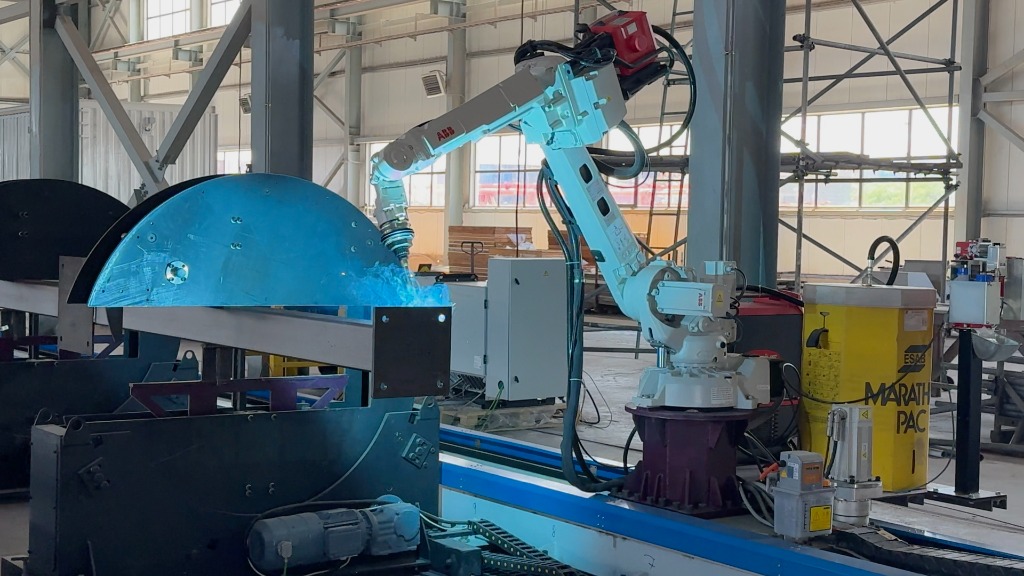
Robotic Welding for Structural Steel
Robotic tack welding and finish welding for structural steel beams. In both QUANT STEELFAB models, Scanner measures geometry for assembly, while TouchSense locates the weld before the welding pass. The current configuration does not continuously track the seam during welding. Weld access, preparation, and the required welding procedure define the application scope.
Advantages of a welding robot over manual labor
Seam quality and welding speed
Programmed motion and welding parameters support repeatability. Weld quality must be assessed against the agreed welding procedure and inspection requirements.
High efficiency
Staffing and payback depend on the beam portfolio, shift pattern, handling time, and local costs. Evaluate them against a representative production cycle.
Saving on materials
Assess wire, shielding gas, and rework consumption using the same parts and welding requirements before and after automation.
Increases the level of production
Coordinated fit-up and welding reduce separate manual process steps. Actual throughput also depends on loading, rotation, and inspection.
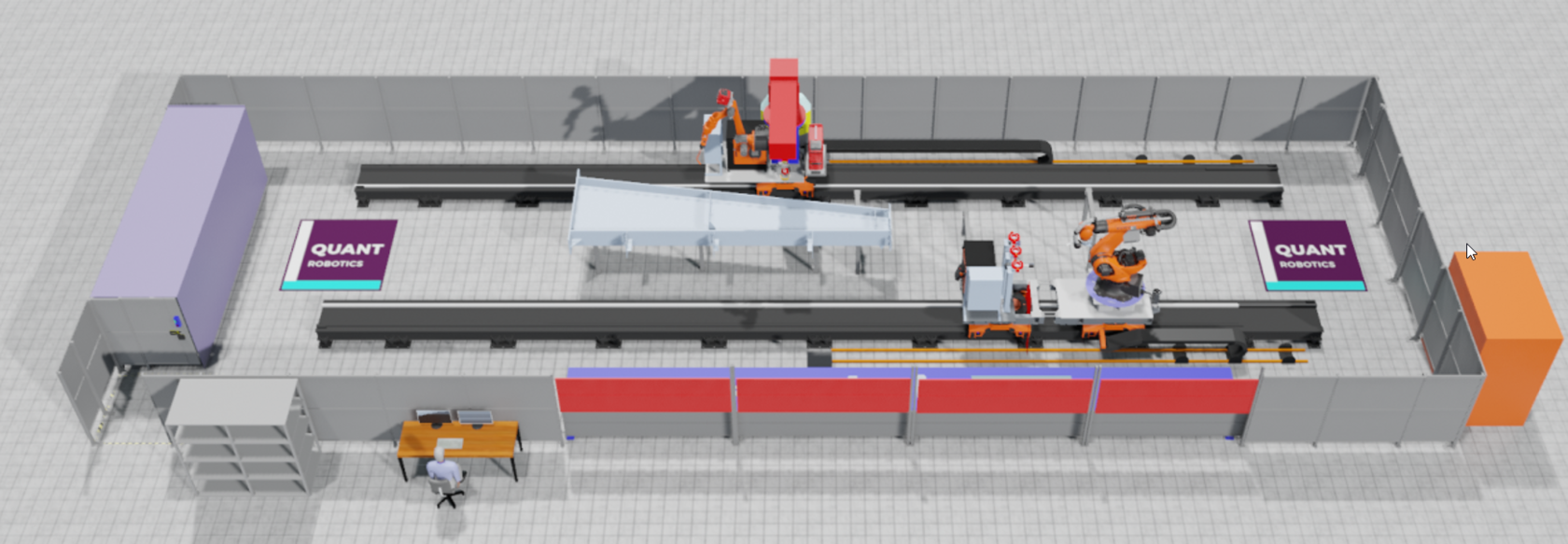
Creating a robotic cell in 3d
In special software, we design your future robotic cell. This helps to answer the main questions even before the launch:
- The welding speed of the part and the performance of the robotic complex
- The number of required work areas
- Possible collisions and points of inaccessibility of the robot
From Technology to Your Production Cell
Compare the two systems, review an application, and define the scope for your own production mix. Configuration and output depend on the parts, weld access, and handling requirements.
QUANT STEELFAB specifications
Beam assembly and welding with operator-guided, crane-assisted setup changes.
QUANT STEELFAB 360 specifications
The same assembly and welding workflow, with operator-initiated rotation to the next setup.
Beam assembly project in India
Explore the operating QUANT STEELFAB installation in Mangalore and its production workflow.
Request a feasibility review
Discuss your beam portfolio, weld requirements, and site constraints.